IP-attorney referral
Help the founder prepare for and connect with qualified intellectual-property counsel while keeping business, disclosure, and development timing visible.
The mandate
Turn validated demand into a product definition.
First contact must stay non-confidential. Do not email unpublished invention details, drawings, trade secrets, credentials, personal financial data, export-controlled material, or regulated records.
Start a non-confidential fit conversation →Use the first conversation only to describe the problem, market, current stage, and blocked decision at a high level. If the parties identify mutual fit and authorize further work, they must establish an approved channel and any required agreement before sensitive technical or commercial material is requested. Ordinary email is not a secure invention repository.
Any engagement, workstream, deliverable, schedule, cost, verification activity, or specialist-company participation depends on a signed scope, approved budget, required inputs, technical and commercial dependencies, third-party availability, and the facts then known. No page promises a specific output or result.
Why this stage exists
A validated idea still needs disciplined definition. This stage converts customer evidence into product requirements and a design direction that engineering, software, sourcing, and future partners can understand.
Protection and design run in coordination, but they are not the same task. Wealth Synergy can organize an IP-attorney referral and the supporting workflow; qualified counsel provides legal advice. In parallel, the technical team develops requirements, architecture, industrial design, CAD, and the controlled records needed for prototyping.
Important boundary: Wealth Synergy and its operating companies are not law firms and do not provide patentability, freedom-to-operate, infringement, or other legal opinions. Legal conclusions belong to qualified counsel.
01 Workstreams
Six connected workstreams, sequenced around the evidence and decisions this stage must produce.
Help the founder prepare for and connect with qualified intellectual-property counsel while keeping business, disclosure, and development timing visible.
Organize invention descriptions, inventor notes, known references, search logs, and questions for counsel without presenting the work as a legal opinion.
Define users, functions, performance targets, constraints, interfaces, environments, maintenance, and acceptance criteria.
Develop form, usability, ergonomics, product language, and the physical experience around the validated use case.
Resolve architecture, materials, mechanisms, tolerances, loads, safety factors, and design tradeoffs appropriate to the concept.
Create controlled models, drawings, bills of material, revision logic, and the files needed to prototype and later quote production.
Field view
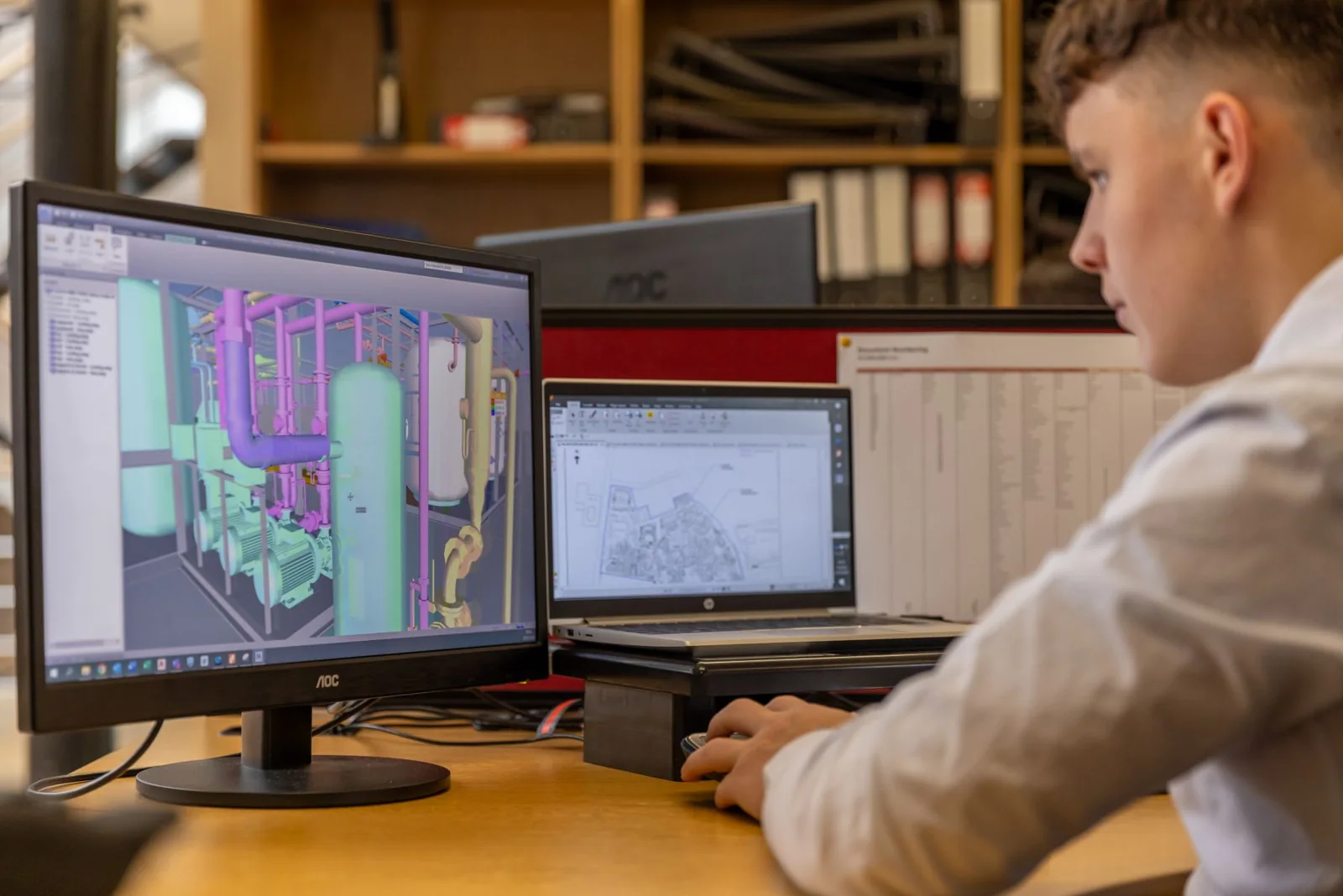
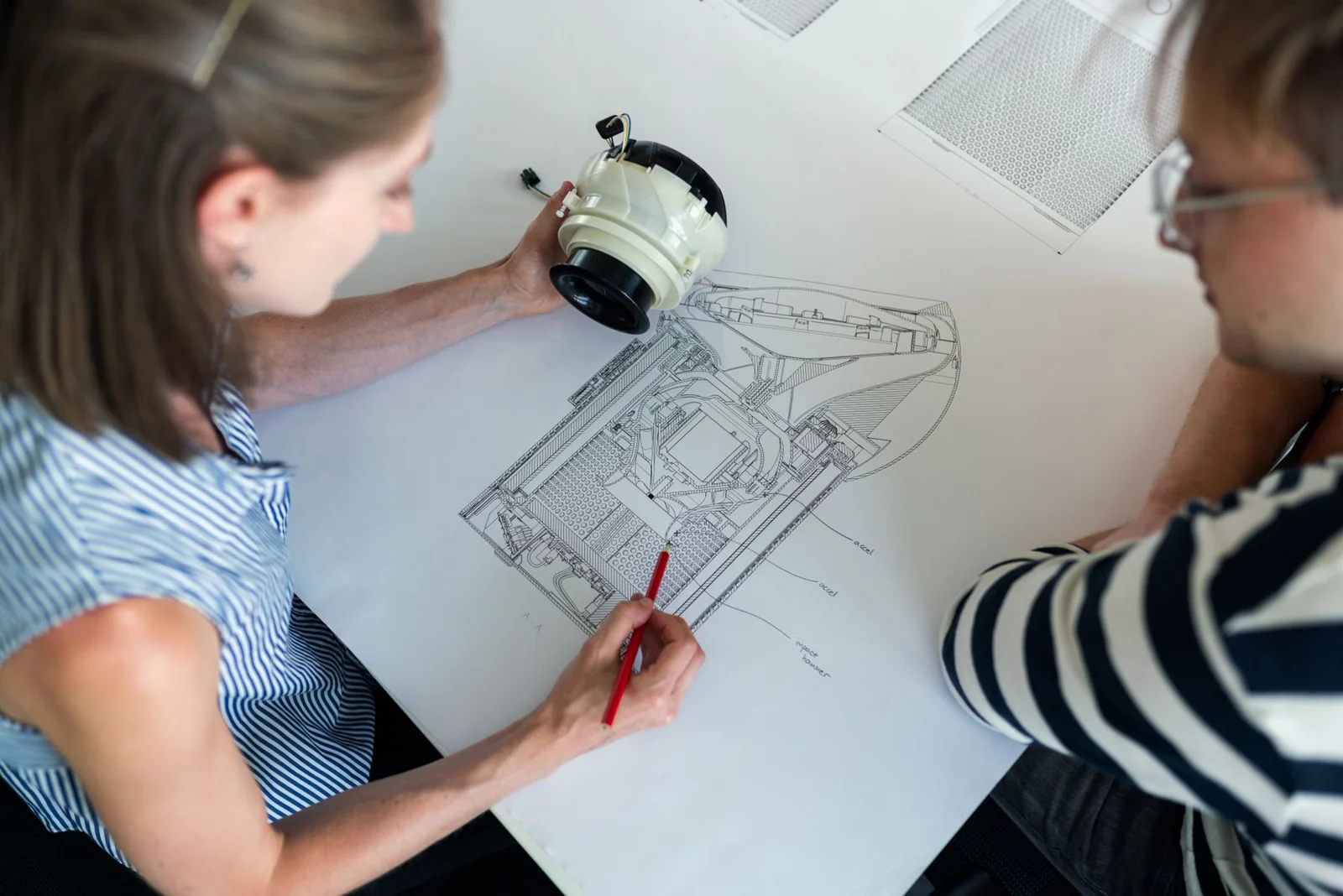
Inventor Forge keeps the decision, the evidence, and the people doing the work in the same frame.
02 Integrated team
Wealth Synergy may coordinate an authorized program. Operating companies may participate only when signed scope, budget, dependencies, and availability support their contribution.
Subject to signed scope and availability, Wealth Synergy may support this stage by coordinating the commercial brief, IP referral workflow, disclosure timing, questions for counsel about ownership, and decisions that cross legal, product, and market work.
Subject to signed scope and availability, Aurea Engineering may support this stage by leading engineering feasibility, product requirements, industrial and mechanical design, CAD, documentation, and design reviews.
Subject to signed scope and availability, White Lion may support this stage by bringing early supplier and manufacturing input into decisions about materials, tolerances, processes, and cost drivers before the design hardens.
Subject to signed scope and availability, Fire Quark may support this stage by defining software, firmware, data, integration, and user-interface requirements when the product includes a connected or digital system.
Subject to signed scope and availability, Media Phoenix may support this stage by keeping the design connected to the customer promise, positioning, usability language, and evidence gathered in Stage 1.
Subject to signed scope and availability, Mountain Top Talent may support this stage by maintaining document control, meeting records, research libraries, version logs, and administrative coordination around counsel and design reviews.
03 Illustrative outputs
These examples are not a package promise. Actual deliverables, depth, schedule, acceptance, and ownership must be stated in a signed scope and remain subject to budget, dependencies, third-party availability, and approved change control.
04 Applied case
A realistic practice case shows what honest stage work looks like when the evidence is incomplete.
MesaLift · Protect & design
The fictional MesaLift team enters Stage 2 with a narrow-aisle replenishment hypothesis, not a frozen product. The product owner translates observed jobs into measurable requirements: pass through a 36-inch aisle with clearance, lift a defined test load to a specified shelf height, remain stable on an agreed floor slope, and allow battery replacement without exposing energized parts. These are training assumptions and must not be treated as certified limits or a safe operating envelope.
A first requirements review exposes conflicts. The founder wants a 300-pound rated load, but the initial commercial evidence centers on lower-weight transfers. The sourcing adviser warns that a custom low-profile actuator could dominate cost and lead time. The industrial design concept fits the aisle target only if the handle folds, yet the fold joint introduces a pinch-point question. A software dashboard is proposed, but no user interview has established a need for connectivity. The team marks the dashboard as optional and prevents it from driving the mechanical architecture.
In parallel, the founder prepares a non-public invention chronology, names contributors, logs known references, and meets registered patent counsel. A preliminary patent search may inform questions, but it is not a patentability or freedom-to-operate opinion. The gate decision belongs to the product owner for technical scope, while counsel and the founder separately control legal filing and disclosure choices. The stage can pass only when requirements are testable, conflicts have disposition owners, and the prototype plan targets the highest remaining risks.
A larger load rating may broaden the market but increases weight, cost, and stability risk. The product owner must decide whether evidence supports the extra requirement before design hardens.
05 Editable stage tool
Connect each requirement to its rationale, verification method, and decision owner. Example values are fictional and not product specifications.
How to use it
| requirement id | requirement | rationale source | priority | verification method | owner | status | change record |
|---|---|---|---|---|---|---|---|
| REQ-001 | Device envelope shall pass through a 36-inch test aisle with approved clearance | VAL-01 directional evidence | critical | dimensional inspection plus maneuverability trial | Product owner | draft | none |
| REQ-007 | Fold joint shall prevent access to the identified pinch zone during intended adjustment | hazard review assumption | critical | design review and specialist-approved test | Engineering authority | open | CR-002 pending |
06 Control the work
A stage can produce useful evidence only when its dependencies and decision rights are explicit.
Dependencies
Common failure modes
Founder responsibilities
07 Measurable decision gate
Named decision role: Product owner with engineering authority; IP decisions reserved to qualified counsel and the founder. Thresholds are illustrative controls for this fictional case; an actual engagement must define its own in signed scope.
Evidence: A controlled PRD with at least 12 uniquely identified requirements, units, rationale, owner, verification method, and status
Illustrative threshold: 100% of safety-critical and prototype-driving requirements must be measurable and have a verification method
Evidence: Matrix connecting each critical requirement to Stage 1 evidence or an explicit regulatory/safety assumption
Illustrative threshold: No critical requirement may be justified only by preference or an undocumented founder request
Evidence: Concept review record, interface map, open-risk register, and prototype build package appropriate to the signed scope
Illustrative threshold: No unresolved red risk without an owner, next test, budget, and due date
Evidence: Counsel referral record, inventor chronology, known-reference log, and disclosure dates
Illustrative threshold: Legal questions are routed to counsel; the program makes no legal conclusion
Pass
Authorize the risk-focused prototype package and retain controlled requirements for Stage 3.
Rework
Resolve contradictory load, aisle, stability, cost, or legal-workflow inputs before releasing a prototype package.
Stop
Pause if the needed performance has no credible architecture within the approved cost and risk boundaries, or if legal/disclosure issues require counsel action first.
08 Source boundary
Official sources inform the workflow. They do not approve MesaLift, replace professional advice, or make a fictional result real.
Patent application, preliminary search, and practitioner resources; not a substitute for counsel or an agency determination.
Reviewed 2026-08-31Official search tool and training materials; a user search cannot establish patentability or freedom to operate.
Reviewed 2026-08-31Workplace hazard information relevant to the fictional use environment; applicable duties require fact-specific professional review.
Reviewed 2026-08-31The connected path
Build evidence that the product can work.