01 What this is
The short version.
Address critical business issues, clarify the opportunity, and connect strategy with the realities of execution.
A founder rarely arrives with a clean question. They arrive with a product that costs more to make than anyone expected, a market that has moved, a team stretched across three jobs, and a decision that has to be made this month. Business consulting inside a foundry starts by separating those threads — then frames the one that actually gates everything else.
We work the problem across the whole venture rather than a single function. A pricing question becomes a sourcing question. A hiring question becomes an automation question. Because the specialists who would deliver each answer sit in the same building, the recommendation you receive has already been sanity-checked against what it costs to execute.
Engagements run from a short framing sprint through to a standing advisory seat as the venture scales. What stays constant is the discipline: assess, frame, design, activate, evolve.
- Typical engagement
- Framing sprint, project engagement, or standing advisory
- Usual duration
- 4 weeks to 12 months
- Works closely with
- Funding Guidance, Technology Consulting, Sourcing & Manufacturing
- Delivered from
- Utah, USA — remote and on-site
02 Scope
What sits inside the engagement.
The list below is the full working scope. Not every engagement uses all of it — the framing session decides which parts matter.
- Business innovation and strategy — Where the opportunity actually is, and what the venture must be true about to win it.
- Feasibility studies — Whether the idea can be built, sourced, staffed and sold at a price the market will pay.
- Business-model evaluation — Unit economics, margin structure, channel fit and the shape of the revenue over time.
- Requirements and proof of concept — Turning an ambition into something specific enough for engineers and suppliers to quote.
- Business cases and roadmaps — The sequence of decisions, with owners, milestones and the cost of each step.
- Integration and optimisation — Making the parts work as one system once they exist — process, tooling and hand-offs.
- Scalability and change management — Preparing the organisation for the volume it says it wants.
03 How it runs
From brief to handover.
A repeatable sequence, so you always know which decision is next and who owns it.
Framing session
We map the ambition, the constraint, the customer and the decisions already in motion.
Evidence gathering
Market, cost, supply and technical inputs pulled from the specialists who work in them daily.
Options and trade-offs
Two or three viable routes, each costed and sequenced — not one recommendation and a shrug.
Activation plan
Owners, milestones, decision points and the capabilities the venture needs at each stage.
05 Pairs well with
Rarely bought alone.
The capabilities most often sequenced alongside this one.
Systems
Technology Consulting
Choose and prove the technology the next stage actually requires — evaluated against your operations, not a vendor's roadmap.
ExploreCapital
Funding Guidance
Evaluate every financing route available to the venture, then make the introductions that matter.
ExplorePeople
Training & Enablement
Bring out the best in the organisation — a curriculum for the people who have to run what you build.
ExploreThe next conversation
What does the venture
need next?
Bring us the ambition, the constraint, and the stage you are navigating. If the foundry is the right shape for it, we'll say so — and if it isn't, we'll tell you that too.
Field view
The work behind
Business Consulting.
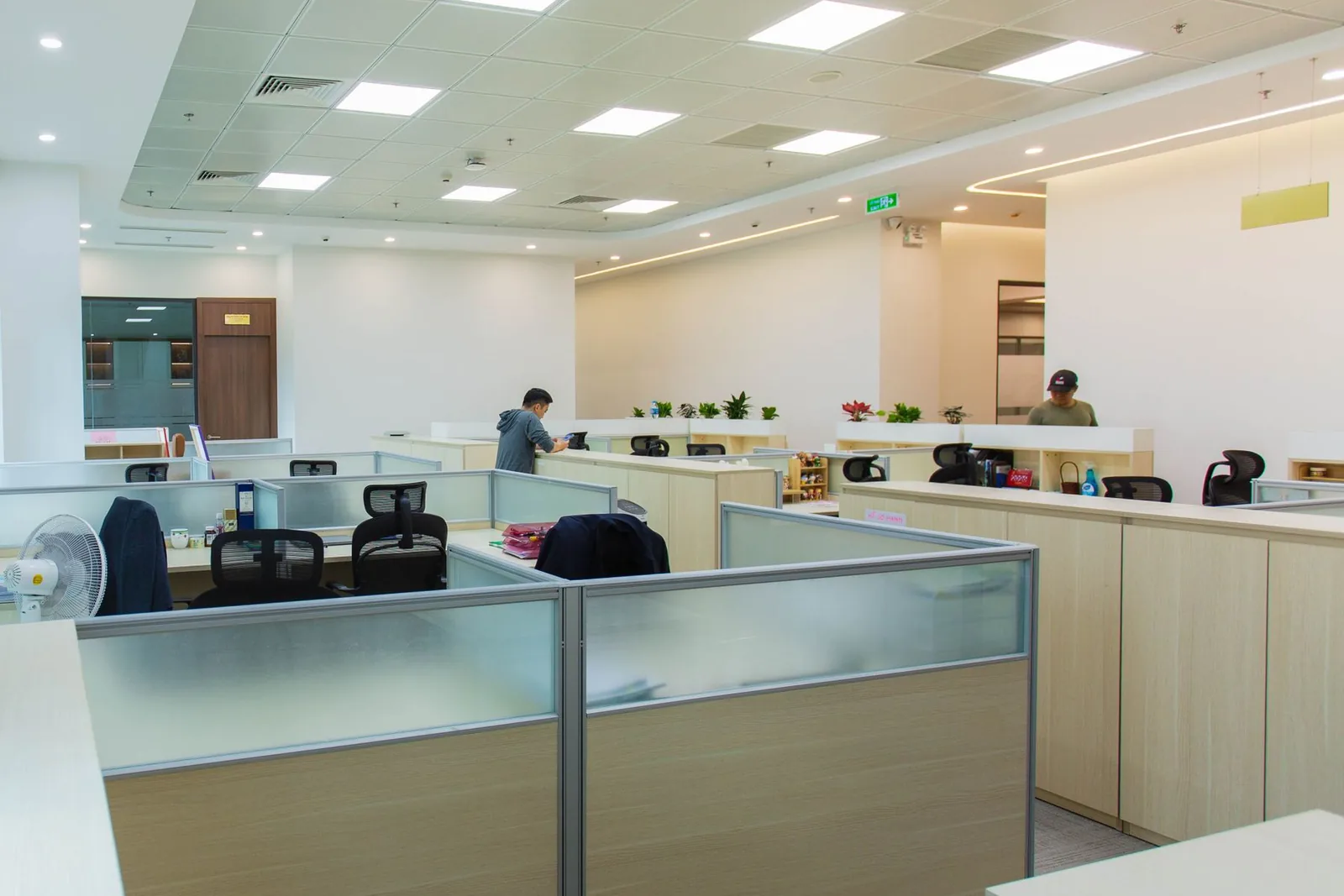
Strategy earns trust when it stays connected to real people, visible work and accountable execution.