Prototype strategy
Choose the lowest-cost prototype that can answer the current question, from appearance models and rigs to functional or integrated prototypes.
The mandate
Build evidence that the product can work.
First contact must stay non-confidential. Do not email unpublished invention details, drawings, trade secrets, credentials, personal financial data, export-controlled material, or regulated records.
Start a non-confidential fit conversation →Use the first conversation only to describe the problem, market, current stage, and blocked decision at a high level. If the parties identify mutual fit and authorize further work, they must establish an approved channel and any required agreement before sensitive technical or commercial material is requested. Ordinary email is not a secure invention repository.
Any engagement, workstream, deliverable, schedule, cost, verification activity, or specialist-company participation depends on a signed scope, approved budget, required inputs, technical and commercial dependencies, third-party availability, and the facts then known. No page promises a specific output or result.
Why this stage exists
A prototype is not merely a smaller version of the final product. It is an instrument for answering expensive questions cheaply. The right prototype depends on the risk: appearance, ergonomics, fit, software behavior, mechanism, durability, manufacturability, or user response.
This stage creates a test-and-learn loop. Each build has a purpose, each test has an acceptance criterion, and every revision is tied to evidence. The result is a more credible technical story for suppliers, funding partners, and the launch team.
Important boundary: Preliminary regulatory analysis is early pathway and requirements mapping. Formal classification, certification, testing, and compliance determinations must come from qualified specialists, laboratories, authorities, or regulators as applicable.
01 Workstreams
Six connected workstreams, sequenced around the evidence and decisions this stage must produce.
Choose the lowest-cost prototype that can answer the current question, from appearance models and rigs to functional or integrated prototypes.
Define methods, conditions, instrumentation, sample sizes, acceptance criteria, and records before results are interpreted.
Translate test results and user observations into controlled design changes rather than informal fixes.
Review processes, materials, tolerances, assembly, serviceability, anticipated yield, and scale constraints with production in mind.
Map likely product classifications, standards, testing needs, labeling questions, and specialist pathways early enough to affect design.
Assemble prototype history, test plans, results, photos, deviations, open risks, decisions, and the recommended next build.
Field view
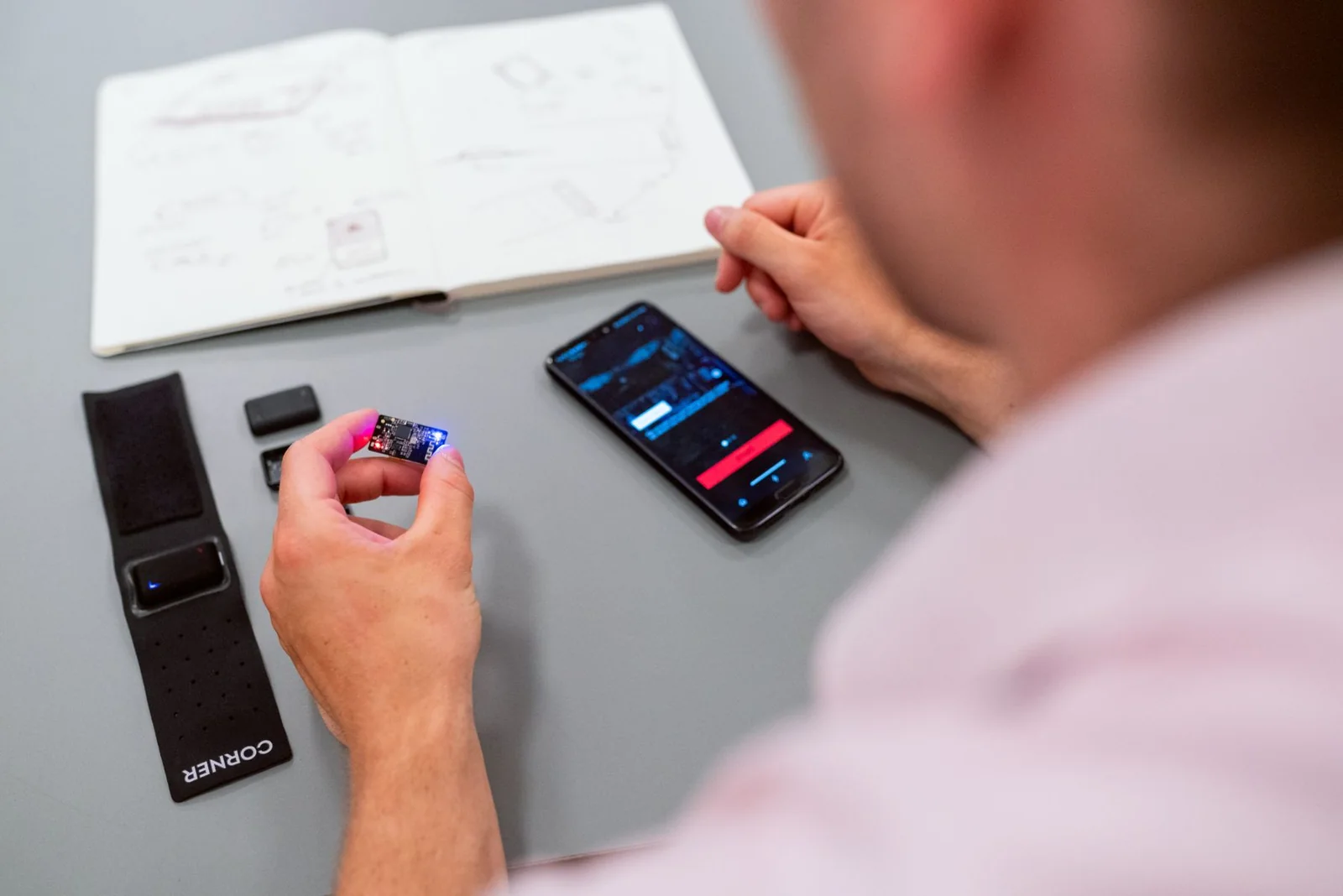
Inventor Forge keeps the decision, the evidence, and the people doing the work in the same frame.

02 Integrated team
Wealth Synergy may coordinate an authorized program. Operating companies may participate only when signed scope, budget, dependencies, and availability support their contribution.
Subject to signed scope and availability, Wealth Synergy may support this stage by setting the proof questions, managing stage-gate decisions, and keeping prototype spending aligned with commercial and funding priorities.
Subject to signed scope and availability, Aurea Engineering may support this stage by leading prototype engineering, test planning, technical iteration, design records, design-for-manufacture reviews, and preliminary standards mapping.
Subject to signed scope and availability, White Lion may support this stage by finding appropriate prototype and low-volume suppliers, obtaining quotations, and bringing supplier process feedback into feasibility reviews.
Subject to signed scope and availability, Fire Quark may support this stage by building and testing software, firmware, data flows, interfaces, or digital prototypes that form part of the product experience.
Subject to signed scope and availability, Media Phoenix may support this stage by supporting user-test recruitment, concept presentation, observation, and the translation of feedback into market-facing implications.
Subject to signed scope and availability, Mountain Top Talent may support this stage by coordinating test participants, schedules, records, issue logs, evidence folders, and follow-through across iterations.
03 Illustrative outputs
These examples are not a package promise. Actual deliverables, depth, schedule, acceptance, and ownership must be stated in a signed scope and remain subject to budget, dependencies, third-party availability, and approved change control.
04 Applied case
A realistic practice case shows what honest stage work looks like when the evidence is incomplete.
MesaLift · Prove
MesaLift’s fictional alpha prototype is built to test maneuverability, controlled lifting, and stability—not to demonstrate a sale-ready product. Before testing, the verification lead freezes the configuration ID, test method, instruments, environmental conditions, acceptance thresholds, and stop conditions. The team deliberately separates engineering exploration from formal verification so a promising informal demo cannot be mislabeled as a passed test.
The synthetic results are mixed. The device completes 27 of 30 maneuverability runs inside the practice aisle; three contacts occur at the folding-handle envelope. It completes 20 lift cycles at the test load, but surface temperature exceeds the team’s provisional limit in the last four cycles. On a defined slope fixture, one configuration approaches the provisional stability margin and testing stops without incident. The results are useful precisely because they expose design work. No safety, regulatory, durability, or certification conclusion follows from this fictional exercise.
The verification lead rejects a simple pass. The handle geometry and thermal behavior go to rework, while the basic architecture remains viable for another controlled build. The stage team records deviations, preserves raw observations, updates the hazard and issue logs, and requests specialist input on applicable standards and regulatory pathways. A later gate can pass only when the critical requirements have objective evidence from the agreed configuration and when unresolved risks are visible to the next decision maker.
Most runs look promising, but averaging the results would hide critical failures. The verification lead must decide at requirement level, not by overall prototype impression.
05 Editable stage tool
Plan and record one verification claim per row, including configuration, acceptance threshold, observed result, and deviation disposition.
How to use it
| test id | requirement id | configuration | method | acceptance threshold | observed result | status | deviation id | reviewer |
|---|---|---|---|---|---|---|---|---|
| T-014 | REQ-001 | ML-A-003 | 30-run aisle fixture trial | 30 of 30 without boundary contact | 27 pass; 3 handle contacts | fail | DEV-006 | Verification lead |
| T-021 | REQ-011 | ML-A-003 | 20-cycle thermal observation | within provisional limit for all cycles | limit exceeded in cycles 17–20 | rework | DEV-009 | Verification lead |
06 Control the work
A stage can produce useful evidence only when its dependencies and decision rights are explicit.
Dependencies
Common failure modes
Founder responsibilities
07 Measurable decision gate
Named decision role: Verification lead independent from the person who designed the feature being accepted. Thresholds are illustrative controls for this fictional case; an actual engagement must define its own in signed scope.
Evidence: Requirement-to-test matrix with configuration IDs, methods, results, raw-data locations, deviations, and reviewer
Illustrative threshold: Every critical requirement is passed, explicitly failed, or carried as an owned open risk—none omitted
Evidence: At least 3 repeated observations for each critical proof question unless a qualified reviewer approves another rationale
Illustrative threshold: No pass may be based on a single uncontrolled demonstration or favorable anecdote
Evidence: All failures and deviations entered in the issue log with severity, containment, owner, and disposition
Illustrative threshold: Zero unowned high-severity issues and zero hidden or informally waived test deviations
Evidence: Documented list of potentially applicable rules, standards, laboratories, and open classification questions
Illustrative threshold: Specialist confirmation is scheduled before any claim that depends on it
Pass
Release only the verified configuration and its stated limits to sourcing; preserve open risks and specialist actions.
Rework
Revise the handle and thermal design, update the test plan, and retest the affected requirements on a controlled build.
Stop
Stop the path if a critical hazard lacks a credible control within the authorized scope or if evidence integrity cannot be established.
08 Source boundary
Official sources inform the workflow. They do not approve MesaLift, replace professional advice, or make a fictional result real.
Principles for traceable measurement results and documented calibration chains; it does not certify MesaLift or its tests.
Reviewed 2026-08-31Consumer-product compliance navigation only when CPSC jurisdiction applies; the fictional product’s jurisdiction is unresolved.
Reviewed 2026-08-31Workplace hazards and relevant resource links; this page is not a product approval or complete standards analysis.
Reviewed 2026-08-31The connected path
Build a supply path the business can defend.